

1.9M
Downloads
481
Episodes
Listen to noted Tour Guide, Lecturer and Yad Vashem Researcher of Jewish History Yehuda Geberer bring the world of pre-war Eastern Europe alive. Join in to meet the great personages, institutions and episodes of a riveting past.
For speaking engagements or tours in Israel or Eastern Europe
Yehuda@YehudaGeberer.com
Episodes
Tuesday Oct 29, 2019
Tuesday Oct 29, 2019
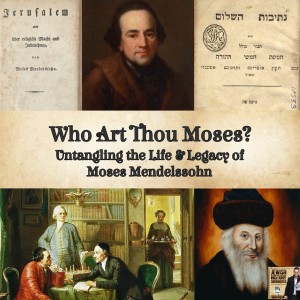
Heralded as the father of Reform Judaism by some, derided as a destroyer of traditional Jewish life by others and forgotten by most, Moses Mendelssohn's legacy continues to intrigue Jewish minds across the spectrum. He entered the gates of Berlin as a young 14 year old, and ultimately embraced the ideals of the enlightenment and German Philosophy. Through his teaching and prodigious literary output, an attempt was made to synthesize traditional Jewish observance while incorporating elements of the surrounding culture. The question remains as to what is his "true" legacy, but his influence remains in the Jewish world till today.
Follow us on Twitter or Instagram at @Jsoundbites
You can email Yehuda at yehuda@yehudageberer.com

Saturday Oct 26, 2019
Saturday Oct 26, 2019
With the World Series currently taking place, it's high time that Jewish History Soundbites takes leave of Eastern Europe and examine the Jewish People's connection to professional baseball. From the famous stories of Hank Greenberg and Sandy Koufax, to the less well known ones of the '69 Mets Jewish connection, America's favorite pastime has deep connections to the Jewish story in the United States. On the 50th anniversary of the 1969 NY Mets World Series victory, we'll delve into the story of why they won. Aside from Jewish players, managers, owners and broadcasters, Jewish fans of baseball have been a barometer of integration into American life and culture. So, as we bask in the pride of various different Jewish players not playing on Yom Kippur, enjoy your kosher hot dog in the stands at "the ole Ball Game"!
Follow us on Twitter or Instagram at @Jsoundbites
You can email Yehuda at yehuda@yehudageberer.com
Wednesday Oct 23, 2019
Wednesday Oct 23, 2019
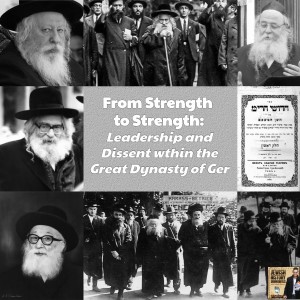
With the current talk about an unheard of split in the storied Chassidic court of Ger, it's worth examining the historical context about why such a move is so unusual. From it's roots in Pshischa and Kotzk, Polish Chassidus experience quite a few upheavals and splits before the Ger dynasty stabilized in the late 19th century. Under the able leadership of the Sfas Emes and even more so of his son Rav Avraham Mordechai Alter, the Imrei Emes, Ger became the largest, most dominant and leading chassidic group in pre war Poland. The Gerrer Rebbe led this veritable empire for 43 years, with the full support of all of his family members, and was dubbed by the Polish press as "the king of the Jews". Following the decimation of Polish Jewry, Ger began to rebuild, this time under the watch of the Bais Yisroel. It was only following the death of the last of the Polish generation that a rebuilt, confident and strong Ger could possibly think of dissent or a split within the community.
Follow us on Twitter or Instagram at @Jsoundbites
You can email Yehuda at yehuda@yehudageberer.com
Wednesday Oct 16, 2019
Wednesday Oct 16, 2019
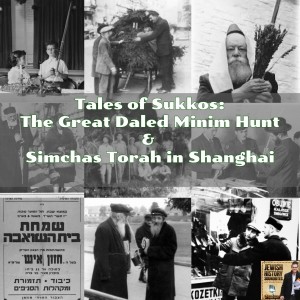
In honor of the happy Sukkos holiday, here's a potpourri of anecdotes - some interesting, others entertaining - of Sukkos throughout recent Jewish history. What was it like to shop for a lulav and esrog when all esrogim had to be imported? How about during wartime? What was the atmosphere in the pre war Yeshivas by the Simchas Bais hashoeva and Simchas Torah? What happened to the Chozeh of Lublin on the last Simchas Torah of his life?
Follow us on Twitter or Instagram at @Jsoundbites
You can email Yehuda at yehuda@yehudageberer.com
Thursday Oct 10, 2019
Thursday Oct 10, 2019
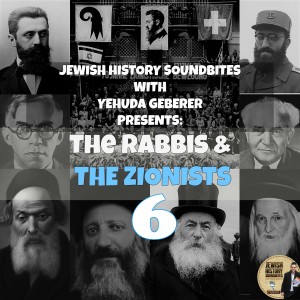
With the passage of time, Rabbinical espoused ideals are processed along the path of the realities and practical considerations of day to day life. It is this execution of policy that forms the basis of our final examination of the Rabbinical positions on Zionism. Specific Rabbinical figures arose in the 1960's-'70's who formulated positions, which form the basis of modern Rabbinical opinion right up to our current times. These range from the Messianic views of Rav Tzvi Yehuda Kook, to the practical considerations of the Gerrer Rebbe, through the active conservatism of Rav Shach and all the way to extreme opposition of the Satmar Rov. A summary of the diverse opinions of these and other great personalities, will enhance our understanding of Rabbinical opinion on Zionism in the modern era, as well as wrap up the series on "The Rabbis & The Zionists".
Follow us on Twitter or Instagram at @Jsoundbites
You can email Yehuda at yehuda@yehudageberer.com
Sunday Oct 06, 2019
Sunday Oct 06, 2019
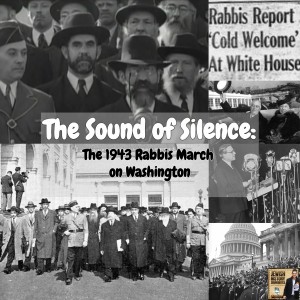
News of the Final Solution reached the west in 1942. As the horrifying reality became apparent, reactions varied both among the general public as well as within the Jewish community. While the American Government refused to relax its rigid immigration quotas, US Jewry debated as to the proper course of action. Would it be a passive acceptance of US policy, a diplomatic attempt to reach the corridors of power, or possibly an outright public protest at how little was being done for the plight of European Jewry. Prominent rescue activist Peter Bergson arranged together with the Vaad Hatzalah, an unprecedented public gathering, so unique in the annals of American Jewish History, that it would garner the publicity needed to effect change in the Governments public policy. A group of over 400 recognizably Orthodox Rabbis would march on Washington, petitioning Congress and the President to do more for Jewish refugees. On October 6, 1943, three days before Yom Kippur, the Rabbis marched.
Follow us on Twitter or Instagram at @Jsoundbites
You can email Yehuda at yehuda@yehudageberer.com
Wednesday Oct 02, 2019
Wednesday Oct 02, 2019
With the seemingly timeless and growing influence of the Sfas Emes's teachings, it may be worthwhile to examine the world which shaped him and his personality. As a scion of chassidic royalty through his grandfather the Chiddushei Harim of Ger, R' Yehuda Aryeh Leib Alter (1847-1905) was expected to rise to greatness. His exposure at a young age to the great R' Menachem Mendel- the "Kotzker" only added to the atmosphere of an already intensely powerful upbringing. The Sfas Emes rose to the occasion and became one of the greatest leaders of Chassidic Poland, building up Ger into one of the largest courts of its day.
Follow us on Twitter or Instagram at @Jsoundbites
You can email Yehuda at yehuda@yehudageberer.com
Thursday Sep 26, 2019
Thursday Sep 26, 2019
With the founding of the State of Israel, ideological positions slowly gave way for practical considerations. The reality of day to day life in the State required a modification of the various Rabbinical positions across the spectrum. Some Rabbis, such as the Satmar Rov and the Eidah Hachareidis, persisted in the extreme position and refused to recognize the legitimacy of the State and it's functions. For their followers who were physically living in Israel, this became an increasingly untenable position. At the other extreme, the Rabbinical leadership of the Mizrachi welcomed the founding of the State as the commencement of the Messianic era. It therefore behooved active participation at both the national and individual level. In the middle were the Rabbis who were either officially or loosely affiliated with the Agudas Yisroel. Some recommended a moderate position, while others took a more extreme line. Still others preferred to be deliberately ambiguous. The question of voting became a contentious issue and evolved into the symbol of practical participation.
Follow us on Twitter or Instagram at @Jsoundbites
You can email Yehuda at yehuda@yehudageberer.com
Tuesday Sep 24, 2019
Tuesday Sep 24, 2019
The primary focus on the Chofetz Chaim's (1839-1933) legacy to the Jewish People is understandably his seforim and various public policy initiatives. He bequeathed a more personal legacy as well- his family. His descendants form quite a diverse group. Some of his progeny played pivotal roles in both the writing, editing and selling of his seforim, while others assisted with the administration of the Radin Yeshiva. Still others accompanied him through his communal activist work. And yet others forged their own path. With an overview of the Chofetz Chaim's family, and how he related to them as a husband, father & grandfather, we can get a glimpse of a more personal side of the influence and impact of arguable the greatest Jewish leader in recent history.
Follow us on Twitter or Instagram at @Jsoundbites
You can email Yehuda at yehuda@yehudageberer.com
Saturday Sep 21, 2019
Saturday Sep 21, 2019
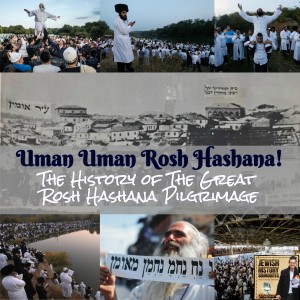
With the current atmosphere being that one has to excuse oneself to justify not travelling to Rabbeinu for Rosh Hashana, it's worthwhile examining the historical roots of this phenomenon. What was the historical context in which R' Nosson of Nemirov made the Rosh Hashana pilgrimage the core of Breslov chassidus? How did the Uman visit look like throughout the years? In the interwar period, Breslov chassidim encountered a challenge that threatened the future of the movement. The Iron Curtain prevented the Chassidim in Poland from reaching Uman. How would they adapt to the new situation? Finally, in the post war era, with the resurgence of Breslov, the Rosh Hashana gathering adapts itself to new worlds and new situations till this very day. Music for this episode: “Rabeinu” by Beri Weber https://youtu.be/gJuStPunxIs
Follow us on Twitter or Instagram at @Jsoundbites
You can email Yehuda at yehuda@yehudageberer.com