

2M
Downloads
506
Episodes
Listen to noted Tour Guide, Lecturer and Yad Vashem Researcher of Jewish History Yehuda Geberer bring the world of pre-war Eastern Europe alive. Join in to meet the great personages, institutions and episodes of a riveting past.
For speaking engagements or tours in Israel or Eastern Europe
Yehuda@YehudaGeberer.com
Episodes
Oct 6, 2019
Oct 6, 2019
27 min
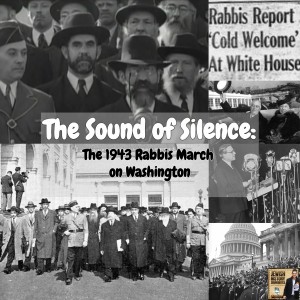
News of the Final Solution reached the west in 1942. As the horrifying reality became apparent, reactions varied both among the general public as well as within the Jewish community. While the American Government refused to relax its rigid immigration quotas, US Jewry debated as to the proper course of action. Would it be a passive acceptance of US policy, a diplomatic attempt to reach the corridors of power, or possibly an outright public protest at how little was being done for the plight of European Jewry. Prominent rescue activist Peter Bergson arranged together with the Vaad Hatzalah, an unprecedented public gathering, so unique in the annals of American Jewish History, that it would garner the publicity needed to effect change in the Governments public policy. A group of over 400 recognizably Orthodox Rabbis would march on Washington, petitioning Congress and the President to do more for Jewish refugees. On October 6, 1943, three days before Yom Kippur, the Rabbis marched.
Follow us on Twitter or Instagram at @Jsoundbites
You can email Yehuda at yehuda@yehudageberer.com
Oct 2, 2019
Oct 2, 2019
25 min
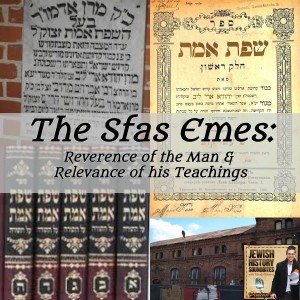
With the seemingly timeless and growing influence of the Sfas Emes's teachings, it may be worthwhile to examine the world which shaped him and his personality. As a scion of chassidic royalty through his grandfather the Chiddushei Harim of Ger, R' Yehuda Aryeh Leib Alter (1847-1905) was expected to rise to greatness. His exposure at a young age to the great R' Menachem Mendel- the "Kotzker" only added to the atmosphere of an already intensely powerful upbringing. The Sfas Emes rose to the occasion and became one of the greatest leaders of Chassidic Poland, building up Ger into one of the largest courts of its day.
Follow us on Twitter or Instagram at @Jsoundbites
You can email Yehuda at yehuda@yehudageberer.com
Sep 26, 2019
Sep 26, 2019
50 min
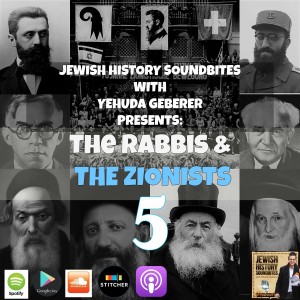
With the founding of the State of Israel, ideological positions slowly gave way for practical considerations. The reality of day to day life in the State required a modification of the various Rabbinical positions across the spectrum. Some Rabbis, such as the Satmar Rov and the Eidah Hachareidis, persisted in the extreme position and refused to recognize the legitimacy of the State and it's functions. For their followers who were physically living in Israel, this became an increasingly untenable position. At the other extreme, the Rabbinical leadership of the Mizrachi welcomed the founding of the State as the commencement of the Messianic era. It therefore behooved active participation at both the national and individual level. In the middle were the Rabbis who were either officially or loosely affiliated with the Agudas Yisroel. Some recommended a moderate position, while others took a more extreme line. Still others preferred to be deliberately ambiguous. The question of voting became a contentious issue and evolved into the symbol of practical participation.
Follow us on Twitter or Instagram at @Jsoundbites
You can email Yehuda at yehuda@yehudageberer.com
Sep 24, 2019
Sep 24, 2019
22 min
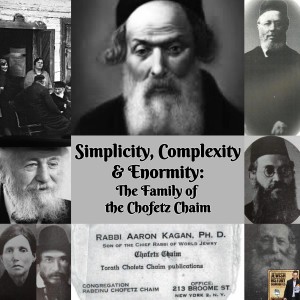
The primary focus on the Chofetz Chaim's (1839-1933) legacy to the Jewish People is understandably his seforim and various public policy initiatives. He bequeathed a more personal legacy as well- his family. His descendants form quite a diverse group. Some of his progeny played pivotal roles in both the writing, editing and selling of his seforim, while others assisted with the administration of the Radin Yeshiva. Still others accompanied him through his communal activist work. And yet others forged their own path. With an overview of the Chofetz Chaim's family, and how he related to them as a husband, father & grandfather, we can get a glimpse of a more personal side of the influence and impact of arguable the greatest Jewish leader in recent history.
Follow us on Twitter or Instagram at @Jsoundbites
You can email Yehuda at yehuda@yehudageberer.com
Sep 21, 2019
Sep 21, 2019
22 min
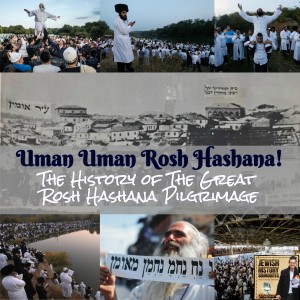
With the current atmosphere being that one has to excuse oneself to justify not travelling to Rabbeinu for Rosh Hashana, it's worthwhile examining the historical roots of this phenomenon. What was the historical context in which R' Nosson of Nemirov made the Rosh Hashana pilgrimage the core of Breslov chassidus? How did the Uman visit look like throughout the years? In the interwar period, Breslov chassidim encountered a challenge that threatened the future of the movement. The Iron Curtain prevented the Chassidim in Poland from reaching Uman. How would they adapt to the new situation? Finally, in the post war era, with the resurgence of Breslov, the Rosh Hashana gathering adapts itself to new worlds and new situations till this very day. Music for this episode: “Rabeinu” by Beri Weber https://youtu.be/gJuStPunxIs
Follow us on Twitter or Instagram at @Jsoundbites
You can email Yehuda at yehuda@yehudageberer.com
Sep 19, 2019
Sep 19, 2019
24 min
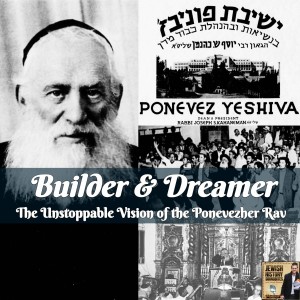
Few leaders in modern times can match the sheer energy and willpower that the Ponovezher Rov- Rabbi Yosef Shlomo Kahaneman (1886-1969) possessed. From his early days in Telz to his Rabbinate in pre-war Ponevezh, to his rebuilding after the trauma of the Holocaust, he never once stopped his active building the future of the Jewish People. Blessed with natural organizational skills, combined with a talent in dealing with people, he managed to inspire others to jump onto the bandwagon of his various projects. A master fundraiser, he would become a renowned globe trotter, where he would inflame Jewish communities worldwide with his oratory skills and magnetic personality.
Follow us on Twitter or Instagram at @Jsoundbites
You can email Yehuda at yehuda@yehudageberer.com

Sep 17, 2019
Sep 17, 2019
24 min
From almost the beginning of the Chassidic movement, a major component of the experience has been the pilgrimage to bask in the Rebbe's presence at his court. More often than not, this took place around the Yomim Tovim. Why was it important to visit the Rebbe for the Holidays? What was the visit like? What went on there? In the inter-war period, perhaps the most famous of the Chassidic courts was in Ger (Gora Kalwaria). With tens of thousands of chassidim converging on this small town for Rosh Hashanah, the atmosphere was electric and truly festive. A fascinating feature of the pilgrimage to Ger was the means of transport. A train line ran from Warsaw to Ger that took it's place in chassidic lore. The Kulaykeh, as it was known, wasn't just a means to an end, but rather became a major component of the visit. Throngs of chassidim would crowd the train, and the Kulaykeh experience essentially transformed into part of the greater Yom Tov visit to Ger.
Follow us on Twitter or Instagram at @Jsoundbites
You can email Yehuda at yehuda@yehudageberer.com
Sep 15, 2019
Sep 15, 2019
26 min
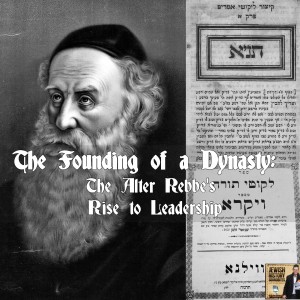
Rav Shneur Zalman of Liady (1745?-1812), known as the Alter Rebbe or the Baal Hatanya, was the founder of the Chabad Chassidus and one of most influential leaders in the history of the movement. How did he start out? Was it an easy road to leadership? He was one of the youngest among the students of the Maggid of Mezritch. Following Rav Mendele of Vitebsk to White Russia, he assisted in spreading Chassidus in that vicinity. But it was only following R' Mendele's aliyah in 1777, that R' Shneur Zalman would begin his rise to a leadership position of Chassidim. Slowly he fashioned his court, his own unique brand of Chassidic thought and began to manage the hordes of Chassidim who began arriving at his door. They came to hear his guidance in serving Hashem, his Divrei Torah and to experience the atmosphere of the court of the Alter Rebbe.
Follow us on Twitter or Instagram at @Jsoundbites
You can email Yehuda at yehuda@yehudageberer.com
Sep 12, 2019
Sep 12, 2019
21 min
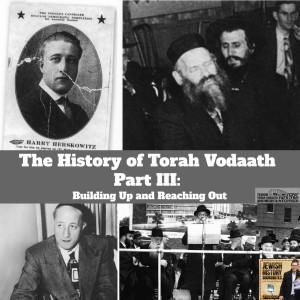
R' Shraga Feivel Mendlowitz (1886-1948) wasn't just a talented educator, a capable school principal, an accomplished organizer and a doer. Above all else, he was a visionary. He saw America as a land of opportunity in a spiritual sense, at a time when most could perceive only materialistic opportunity and a threat to the spiritual. He therefore structured the Yeshiva to reflect his unique philosophy and built a curriculum that had been seldom seen in the annals of the Yeshiva world. At the same time, he reached out and engaged a cadre of dedicated laymen who would form the financial backbone of the Yeshiva activities as well as managing it as the Board of Directors. These amazing people threw all their energies into realizing the vision of building Torah in the United States. Chief among this group was regional director for the IRS named Harry Herskowitz. Harry literally dedicated his life for the success of Torah Vodaath, and helped it sustain and flourish in those early years. His legacy remained in his family and with the other laymen that he influenced with the vision of Yeshiva Torah Vodaath.
Follow us on Twitter or Instagram at @Jsoundbites
You can email Yehuda at yehuda@yehudageberer.com
Sep 10, 2019
Sep 10, 2019
49 min
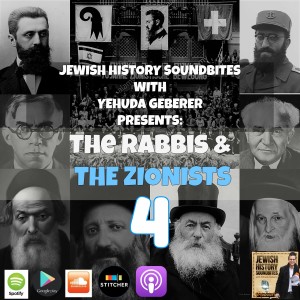
The great political & ideological discussions that marked the interwar period were at their peak, when the greatest calamity to hit the Jewish People instantly transformed the entire dialogue. Rabbinical opinion once again diverged in light of the national catastrophe. Some Rabbis continued with the pre-war pragmatic approach of waiting things out and seeing how the outside factors develop. Others reinforced their pre-war opinions of either support or opposition of the entire Zionist enterprise. The novelty of the post Holocaust world however, saw the emergence of a new stream of Rabbinical opinion, which stated that the calamity that had befallen European Jewry changed the rules of the game. Some mitigated their opposition of Zionism as a result, while others went still further and became full fledged supporters of the creation of a Jewish State. In May 1948, the Rabbinical world responded to yet another development of Zionism, by far the one with the most far reaching consequences- the founding of the State of Israel. Zionism was no longer an ideal or a vision. It was an established fact and a reality that had to be reckoned with. The great Rabbinical leadership from across the ideological spectrum, met the challenge and formulated their opinions accordingly.
Follow us on Twitter or Instagram at @Jsoundbites
You can email Yehuda at yehuda@yehudageberer.com